

The lessons, investments, growing pains, and decisions that helped me turn a new wedding planning business into a luxury event planning company.
When I started Lavish Haus Events, I had no idea just how much I would learn about running a business, building a brand, managing clients, and, perhaps most importantly, understanding the value of my time.
Like many creative entrepreneurs, I started with a passion for the industry and a vision for what I wanted to build. What I didn't have was years of experience, established workflows, a team, or a complete understanding of how to price my services profitably.
Over the years, I invested countless hours into building Lavish Haus Events from the ground up. I made mistakes, adjusted my pricing, learned which clients and projects were the right fit, invested in education, and eventually built the systems that allowed my business to grow more intentionally.
By 2024, Lavish Haus Events was generating nearly $500,000 in annual revenue while producing fewer events than the year before.
But getting there was anything but an overnight success.
Here's how it happened, what I learned along the way, and what I would do differently if I were starting today.
The Beginning: Building a Business Before Booking Clients
One of the best decisions I made when starting Lavish Haus Events was investing in a business mentor.
Before I had a roster of clients or a portfolio of weddings, I worked on building a business plan. I wanted to understand what I was offering, who I wanted to serve, and how I could turn my passion into a legitimate business.
From there, I started showing up on social media, sharing my vision, introducing my services, and putting my name out there.
And eventually, I landed my very first client.
My first wedding planning contract was $750.
It wasn't a huge contract, but it was a starting point. Someone trusted me with their wedding, and that opportunity gave me the experience and confidence to keep going.
At the time, I was focused on gaining experience, building relationships, and getting my name into the industry.
Styled Shoots, Networking, and Finding My Creative Direction
In the early days, I participated in a tremendous number of styled shoots.
These weren't necessarily revenue-generating opportunities. They were investments of my time, energy, and sometimes my own money.
But they served a purpose.
Styled shoots allowed me to connect with other wedding professionals, experiment creatively, build a portfolio, and, most importantly, figure out what I liked and didn't like.
I learned what types of designs excited me, which vendor relationships I wanted to develop, and what direction I wanted my brand to take.
Not every shoot was perfect, and not every opportunity led to a booking. But each experience helped me become more intentional about the business I was building.
Learning How to Price My Services
Pricing was one of the biggest learning curves.
When you're just getting started, it's difficult to know what to charge because you don't yet have enough experience to understand how much time each service actually requires.
I started by learning the differences between coordination, partial planning, and full-service planning.
My early pricing structure looked something like this:
Wedding Coordination: $1,500
Partial Planning: $3,500
Full-Service Planning: $5,000
These were flat-fee starting points that gave me a structure to work from.
At the time, I didn't fully understand how much my scope could change from one wedding to another or how many hours I would actually spend servicing each client.
That understanding came with experience.
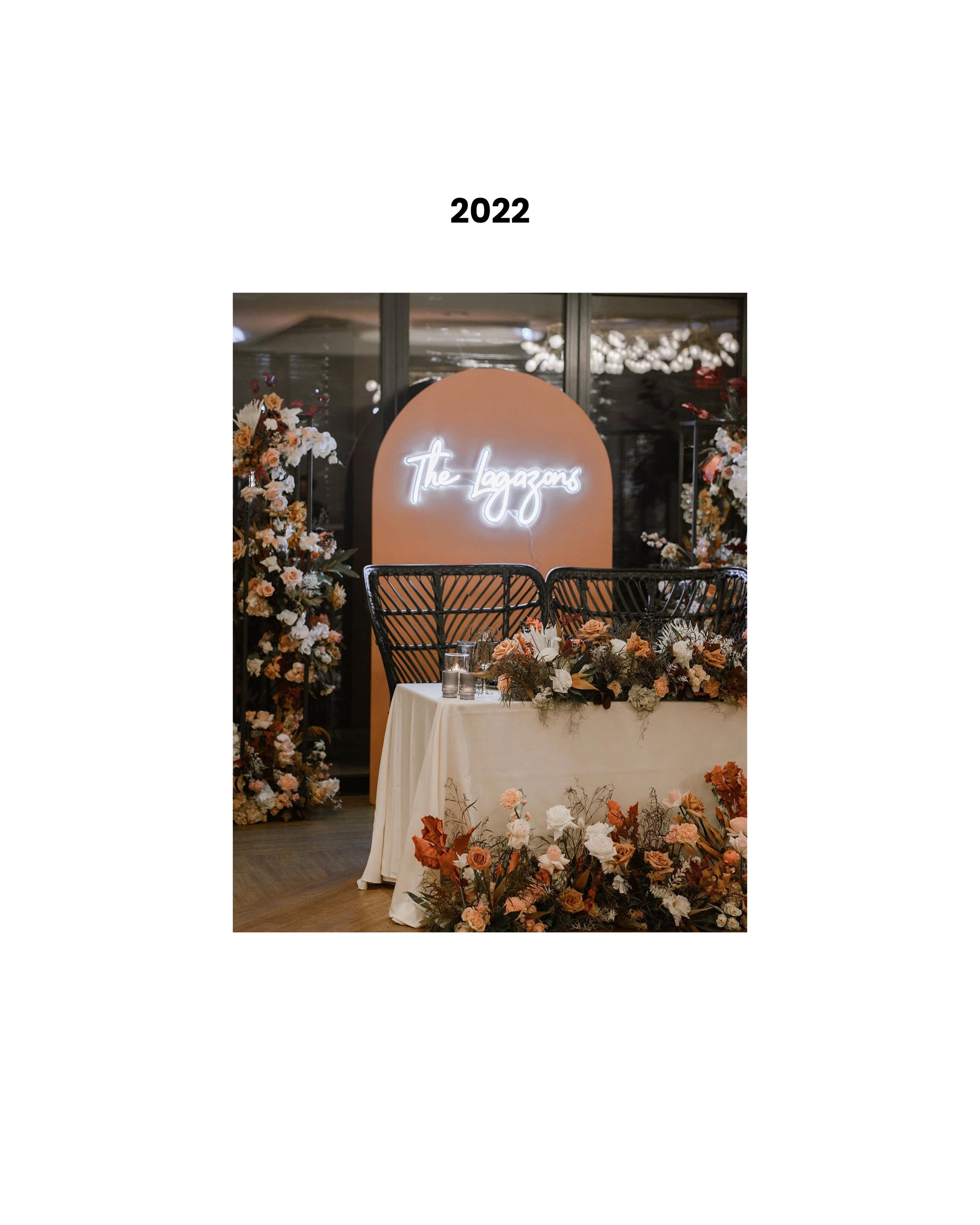
2022: Building Momentum, Expanding Services, and Tracking My Time
$155,000 in Revenue | 19 Events
By 2022, Lavish Haus Events was gaining traction.
I was booking more clients, developing my reputation, and slowly increasing my pricing as my experience and demand grew.
I was also beginning to recognize opportunities to expand the business beyond traditional wedding planning services.
Rather than outsourcing every creative element, I started introducing additional services and products that we could manage in-house, including custom signage, escort displays, and other event design elements.
There were two reasons behind this decision.
First, I wanted to create additional revenue streams. Second, I wanted to maintain greater creative control over the details that contributed to our overall event designs.
These offerings allowed us to provide clients with a more cohesive experience while generating additional revenue from projects we were already managing.
The Beginning of Time Tracking
2022 was also the year I started manually tracking my time.
At first, it was relatively simple. I wanted to understand how many hours I was spending on each client and whether the fees I was charging actually made sense.
When you're running a service-based business, it's easy to focus on the total contract amount without considering how much time you're investing to fulfill that contract.
A $5,000 planning contract might sound great, but if you're spending hundreds of hours managing that client, your actual hourly earnings tell a very different story.
I began paying closer attention to how much time I was spending on planning, client communication, design work, and general project management.
I didn't have a perfect system yet, but I was starting to gather information that would become incredibly valuable as the business grew.
My biggest lesson from 2022?
Revenue alone doesn't tell you whether your business is profitable.
Understanding your time, costs, labor, and margins matters just as much as how much money you're bringing in.
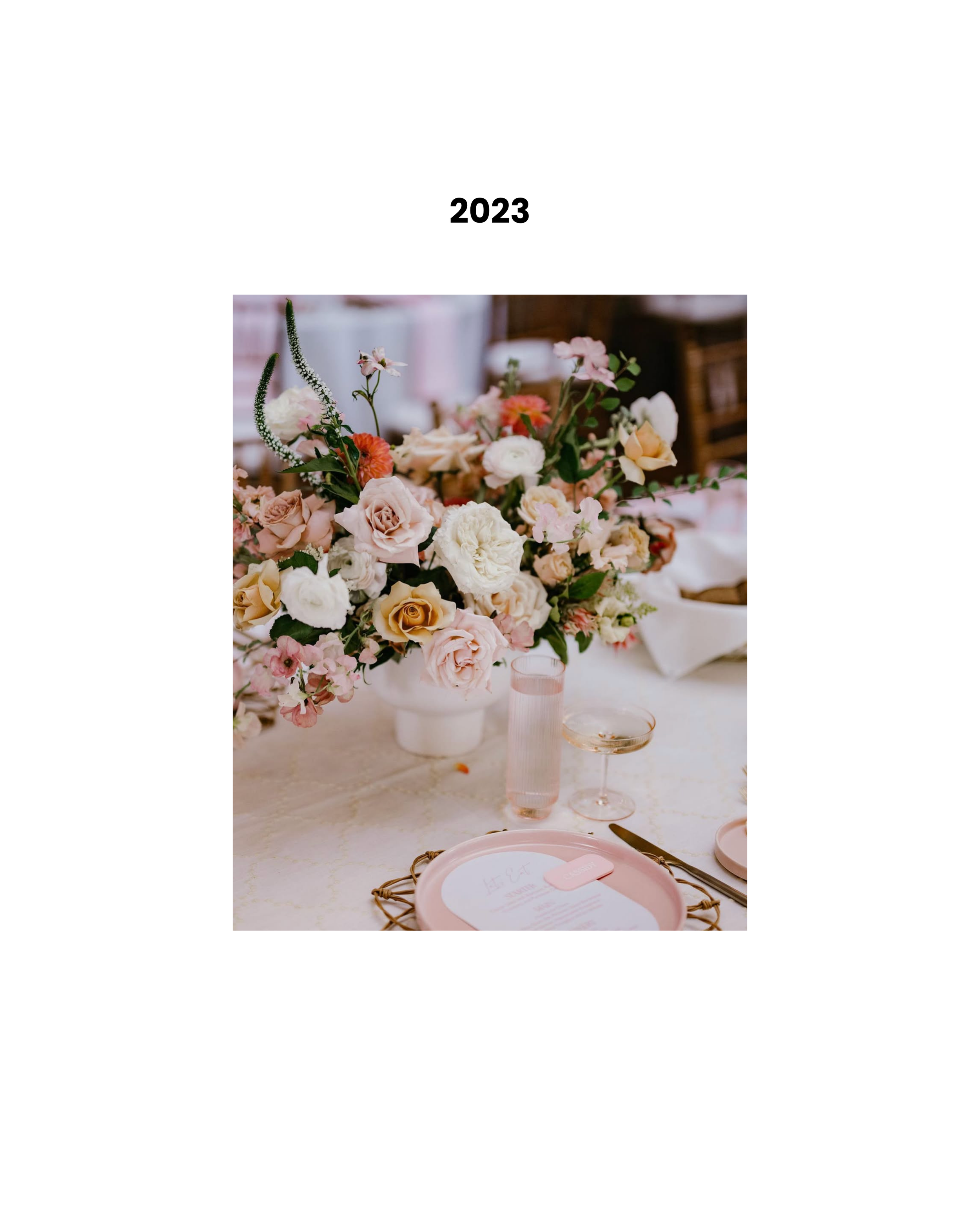
2023: The Year I Realized What Wasn't Working
$260,000 in Revenue | 29 Events
2023 was a major growth year for Lavish Haus Events.
Revenue increased significantly, and we produced more events than ever before.
From the outside, everything looked like it was moving in the right direction.
And in many ways, it was.
But behind the scenes, I was exhausted.
I was managing a growing client roster, navigating countless moving pieces, and realizing that many of the processes I had relied on in the early days were no longer sustainable.
The business was growing, but the structure behind it wasn't keeping up.
Tracking Everything, Not Just the Big Tasks
While I had started tracking my time in 2022, 2023 was when I really began cracking down on it.
And I mean everything.
I had my team track their time across every project, including the tasks that might seem insignificant on their own.
We tracked time spent on email communication, vendor research, design boards, proposal revisions, client meetings, and even the simple back-and-forth conversations with vendors.
Why?
Because those small tasks add up.
An extra 15 minutes responding to an email might not seem significant, but multiply that by dozens of emails, several vendors, multiple revisions, and months of planning.
Suddenly, you're looking at a substantial amount of time that needs to be accounted for.
By tracking our time in greater detail, I could start comparing projects, understanding where our resources were going, and identifying which services and client relationships were requiring more work than we had originally anticipated.
It also gave me a much clearer picture of how we needed to approach pricing moving forward.
Building a Repeatable Client Experience in Asana
Another major investment I made in 2023 was building out our internal project management system in Asana.
I wanted every client to receive the same level of organization, communication, and attention to detail, regardless of who on our team was managing the project.
So I started developing a repeatable workflow that could be duplicated for every new client.
This wasn't just a checklist of tasks. It was a comprehensive planning process that followed the entire client journey.
From the initial kickoff meeting, we had a structure for vendor research and outreach, design development, presentation preparation, client approvals, timeline management, and all of the little details that contribute to an elevated wedding experience.
We even incorporated thoughtful touches like keepsake offerings and post-event responsibilities.
And our process didn't end when the wedding was over.
We created an offboarding workflow to ensure clients received their final documents and resources, including completed contracts, final budgets, and other important information from the planning process.
The goal was simple: every client should receive a consistent, thoughtful, and professional experience from beginning to end.
Having this system in place also meant our team had a clear understanding of what needed to happen, when it needed to happen, and who was responsible.
Rather than relying on memory or constantly reinventing the process, we had a foundation that could be repeated and refined.
And as we learned what worked and what didn't, we continued improving it.
Investing in Education, Mentorship, and Templates
This was also the year I made intentional investments in the backend of Lavish Haus Events.
I invested in additional mentorship, educational courses, and resources that helped me better understand how to structure and operate a growing business.
I continued developing our client communication templates, internal workflows, standard operating procedures, and planning resources.
Instead of writing the same emails over and over or recreating documents for every client, I wanted resources that were ready to use and easy to customize.
These investments weren't necessarily the most exciting parts of running a creative business, but they were some of the most important.
The biggest lesson from 2023 was that more revenue doesn't automatically mean a better business.
We had generated over $100,000 more in revenue than the previous year, but we had also taken on 10 additional events.
I was working more, managing more, and carrying more responsibility.
I needed to find a way to increase revenue without continuing to increase our event volume at the same rate.
That realization changed how I approached the next year.
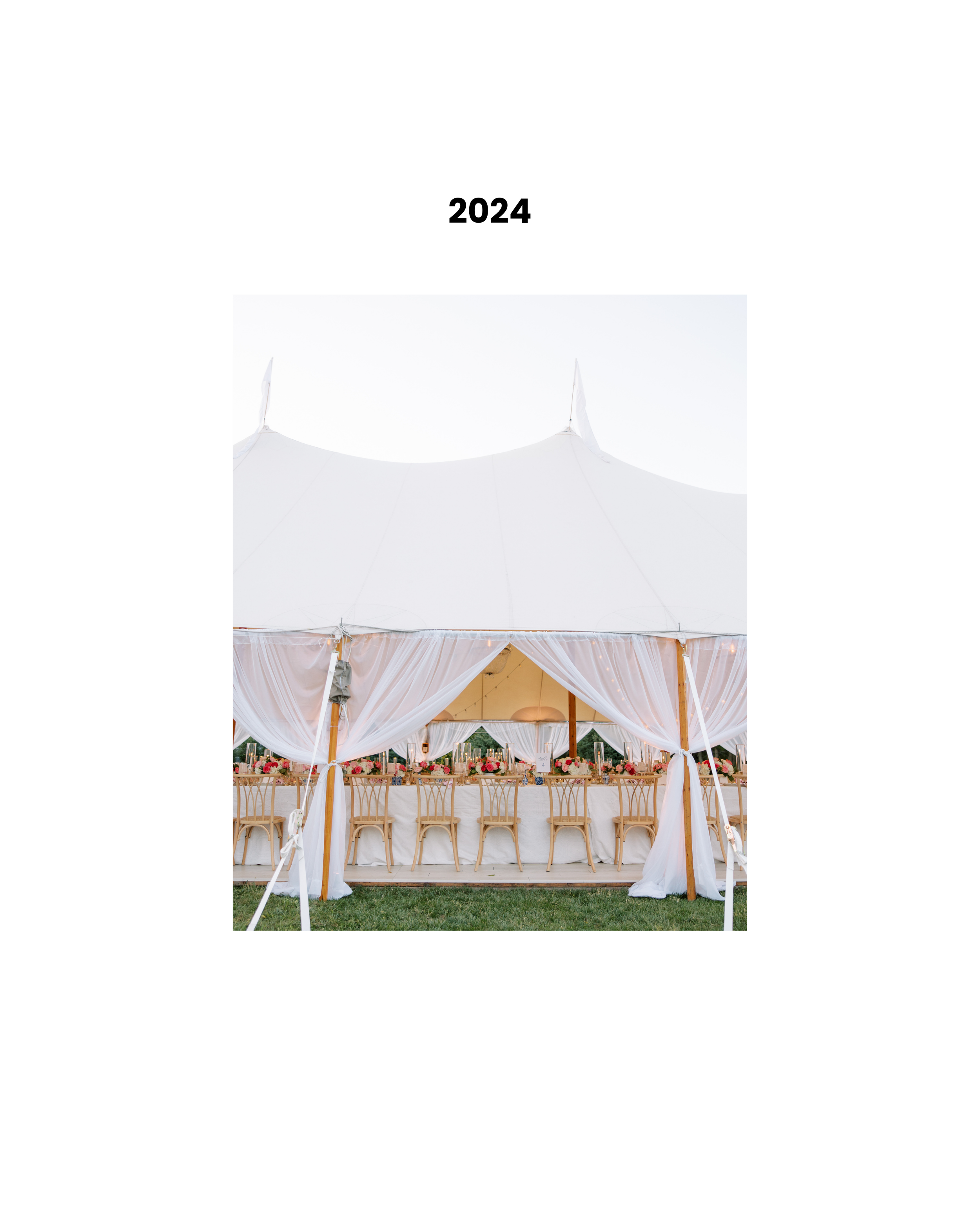
2024: Refining Our Niche, Pricing, and Marketing
$483,000 in Revenue | 22 Events
2024 was a turning point for Lavish Haus Events.
By this point, I had a much better understanding of our services, our ideal clientele, and the type of events that aligned with our brand.
We had spent years building our portfolio, developing industry relationships, refining our creative direction, and learning what worked operationally.
Now, it was time to become more intentional about who we were attracting and how we were pricing our services.
Understanding Our Ideal Clientele
One of the most valuable things we did in 2024 was survey our ideal clientele.
Rather than assuming we knew why clients were booking us, we went directly to the source.
We wanted to understand how they had discovered Lavish Haus Events, what initially attracted them to our company, and what they valued most about working with us.
The responses gave us insight into how we should be positioning our business moving forward.
Instead of creating marketing content that tried to appeal to everyone, we started speaking directly to the type of clients we genuinely wanted to work with.
And our niche became much more refined.
We weren't simply looking for clients with larger budgets or more elaborate weddings.
We wanted clients who trusted our expertise, valued our creative direction, and were excited to collaborate with us throughout the planning process.
Clients who gave us creative freedom, respected our recommendations, and understood the value of having a professional team manage their wedding.
That level of trust made a tremendous difference in the planning experience.
It allowed us to do our best work, develop stronger relationships, and create events that reflected both our clients' vision and our creative expertise.
Once we became more intentional about speaking to that clientele through our marketing, we were better positioned to attract the types of inquiries we actually wanted.
This was a significant shift.
Rather than focusing solely on getting more inquiries, we focused on attracting better-aligned inquiries.
Moving Away From Flat-Fee Pricing
As I became more familiar with the luxury wedding market, I learned that many high-end planners were utilizing percentage-based pricing structures rather than relying solely on flat fees.
And suddenly, it made sense.
We had experienced firsthand how significantly the scope of a wedding could change throughout the planning process.
A client might begin with one budget, but as they selected custom rentals, elaborate floral installations, additional design elements, or expanded guest experiences, their overall wedding investment could grow substantially.
And with those changes came more work for us.
More vendor communication. More proposals. More revisions. More logistics. More details to manage.
Yet our flat-fee planning contract remained the same.
We were doing significantly more work without being compensated proportionately for that additional responsibility.
Introducing Management Fee Pricing
We began transitioning toward a percentage-based pricing model, which I referred to as our management fee.
Rather than relying on one fixed planning fee regardless of the final wedding investment, our pricing could better reflect the scale and complexity of the event we were managing.
This created a more sustainable structure for the business.
As the event grew, our compensation could grow with it.
It also allowed us to become more intentional about the clients we accepted and the level of service we provided.
Instead of focusing on booking as many weddings as possible, I started focusing on booking the right weddings at the right price.
And the results spoke for themselves.
We went from generating $260,000 across 29 events in 2023 to approximately $483,000 across just 22 events in 2024.
That's an 86% increase in revenue while producing approximately 24% fewer events.
It wasn't just about increasing prices.
It was about understanding our value, refining our niche, improving our systems, listening to our clients, and positioning the business for stronger profitability.
Looking Back at the Numbers
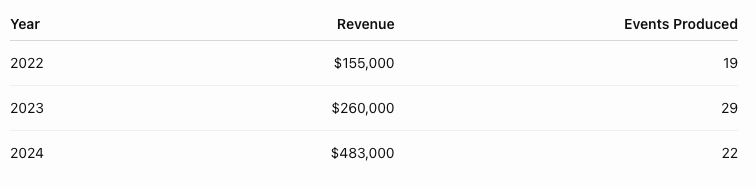
Over those three years, annual revenue more than tripled.
But the most meaningful part of that growth wasn't simply the dollar amount.
It was recognizing that I didn't need to continue taking on more and more events to grow the business.
I needed better pricing, stronger systems, a clear understanding of my ideal client, and the confidence to make decisions that supported long-term profitability.
What I Would Do Differently If I Were Starting Today
I don't regret the journey. Every styled shoot, difficult client situation, late night, and investment taught me something valuable.
But knowing what I know today, there are absolutely things I would have implemented much earlier.
I would have established a detailed time-tracking process from the very first client, including all the small tasks that are so easy to overlook.
I would have built a repeatable project management system before my client roster grew, with clear workflows for every stage of the planning process.
I would have created email templates, vendor communication resources, and client-facing documents before I became overwhelmed with repetitive administrative tasks.
I would have evaluated my pricing based on actual labor, scope, and profitability rather than simply looking at what other planners were charging.
And I would have taken the time to understand my ideal clientele earlier, so my marketing could speak directly to the people I wanted to attract.
Because the truth is, you don't need to wait until your business is generating six figures to start operating like a professional, established company.
You can create that foundation from day one.
Why I'm Sharing Everything I've Learned
As I transition from producing luxury weddings into business education and mentorship, one of my biggest goals is to help other wedding planners avoid some of the growing pains I experienced.
I spent years investing in mentors, courses, resources, and countless hours of trial and error to figure out how to build and operate Lavish Haus Events.
And while that experience was invaluable, I also know how overwhelming it can feel when you're trying to piece everything together on your own.
That's exactly why I created How to Run a Wedding Planning Business.
I wanted to create a comprehensive, turnkey resource that goes beyond simply telling you what to do.
The course walks you through the actual processes involved in running a wedding planning business, from building your foundation and pricing your services to managing clients, communicating with vendors, developing design presentations, creating timelines, and maintaining momentum as you grow.
And because I know how much time it takes to create these resources yourself, I've included practical tools you can put to use in your own business, including client email templates, a wedding planning contract template, and workflow resources.
These are the types of resources I wish I had when I first started.
My goal isn't to tell you that there's only one way to build a successful wedding planning business.
It's to give you the knowledge, structure, and tools to make informed decisions, establish professional processes, and build a business that supports both your financial goals and the life you want to lead.
Your Business Doesn't Have to Grow the Hard Way
If there's one thing I hope you take away from my journey, it's this:
Building a successful business isn't just about how many clients you book or how much revenue you generate. It's about what you're building behind the scenes to support that growth.
It's about understanding your numbers, valuing your time, creating an exceptional client experience, and having the right processes in place so your business can grow sustainably.
Lavish Haus Events gave me years of experience, incredible opportunities, and lessons I now get to share with other creative entrepreneurs.
And if I can help another planner build a stronger foundation, avoid costly mistakes, and gain confidence in running their business, then sharing this journey is worth it.
Ready to Build Your Wedding Planning Business?
Whether you're just getting started or looking to create more structure in your existing business, How to Run a Wedding Planning Business was designed to help you confidently manage the work behind the weddings.
With actionable education, ready-to-use templates, and resources developed from my experience building Lavish Haus Events, you'll have the tools to start putting what you learn into practice.
Explore the Course | How to Run a Wedding Planning Business
Your business. Your goals. A more intentional approach to growth.
